TELL: An app to evaluate speech in the service of brain health (in Spanish)

By 2050, over 150 million people will be diagnosed neurodegenerative disorders, mainly including Alzheimer’s disease, Parkinson’s disease, and frontotemporal dementia. This scenario has spurred a quest for objective, affordable, scalable markers to improve early detection and symptom monitoring. Prominent among these efforts is automated speech and language analysis (ASLA), with several papers demonstrating its potential […]
Argentine researchers developed an app to detect neurodegenerative diseases (in Spanish)

Long before magnetic resonance imaging, positron emission tomography and other brain images allowed us to glimpse what is going on inside our skull without drilling into it, human beings had another invaluable resource: words. Words can not only «implant» themselves into the brain and transform it, but also tell us how it is functioning. You […]
Include Network: For global equity in language-based brain health research

Atlantic Fellows for Equity in Brain Health Adolfo Garcia and Boon Lead Tee; UCSF neurologist Jessica de Leon; and GBHI faculty member Marilu Gorno-Tempini discuss the launch of Include, a new initiative focused on global equity in language-based brain health research. You can read the full article here.
Worldwide TED Talk release
(in Spanish)

Dr. Adolfo García gave a talk on the brain and body weft of language at TEDxRíodelaPlata, in front of 12,000 people. You can watch the full talk, in Spanish, here.
A global network for linguistic research on brain health (in Spanish)

Language offers privileged insights into brain health. For example, we have seen that specific linguistic alterations contribute to the detection and characterization of Alzheimer’s disease dementia, Parkinson’s disease, and epilepsy. Recently, the clinical potential of language analysis has been bolstered by computerized tools, which reveal subtle markers of these diseases in natural discourse via objective, […]
Include kick-off meeting

Terrific kick-off meeting for INCLUDE! Leading researchers from 30+ countries joined to start groundbreaking crosslinguistic studies on brain health. Lots of exciting work ahead!
Dysgraphia phenotypes in Chinese language users with primary progressive aphasia
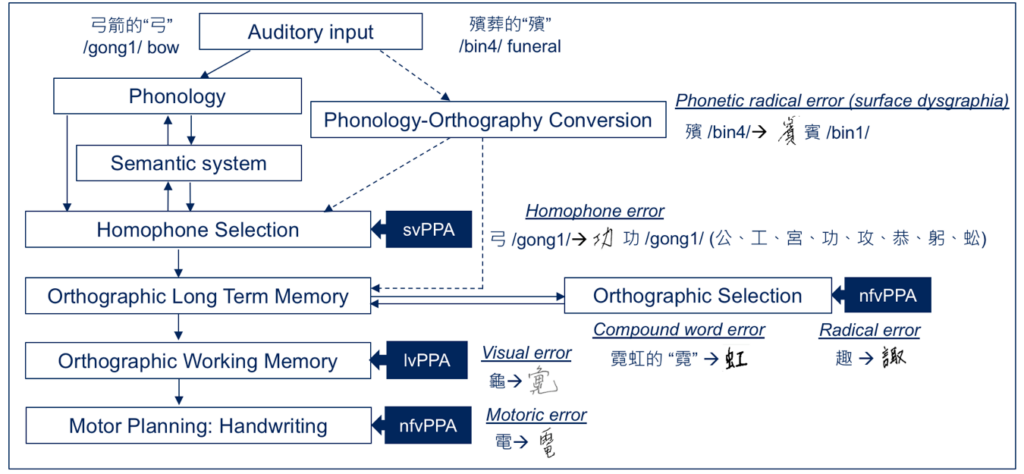
Chinese Language Assessment in Primary Progressive Aphasia (CLAP) workgroupCorrespondence: Dr. Boon Lead Tee, boonlead.tee@ucsf.edu Study Question: What are the dysgraphia presentations of primary progressive aphasia (PPA) patients who write in Chinese script? What is Known and What This Papers Adds: Studies on English language speakers with PPA show that individuals with semantic variant PPA commonly […]
Effects of bilingualism on age at onset in two clinical Alzheimer’s disease variants
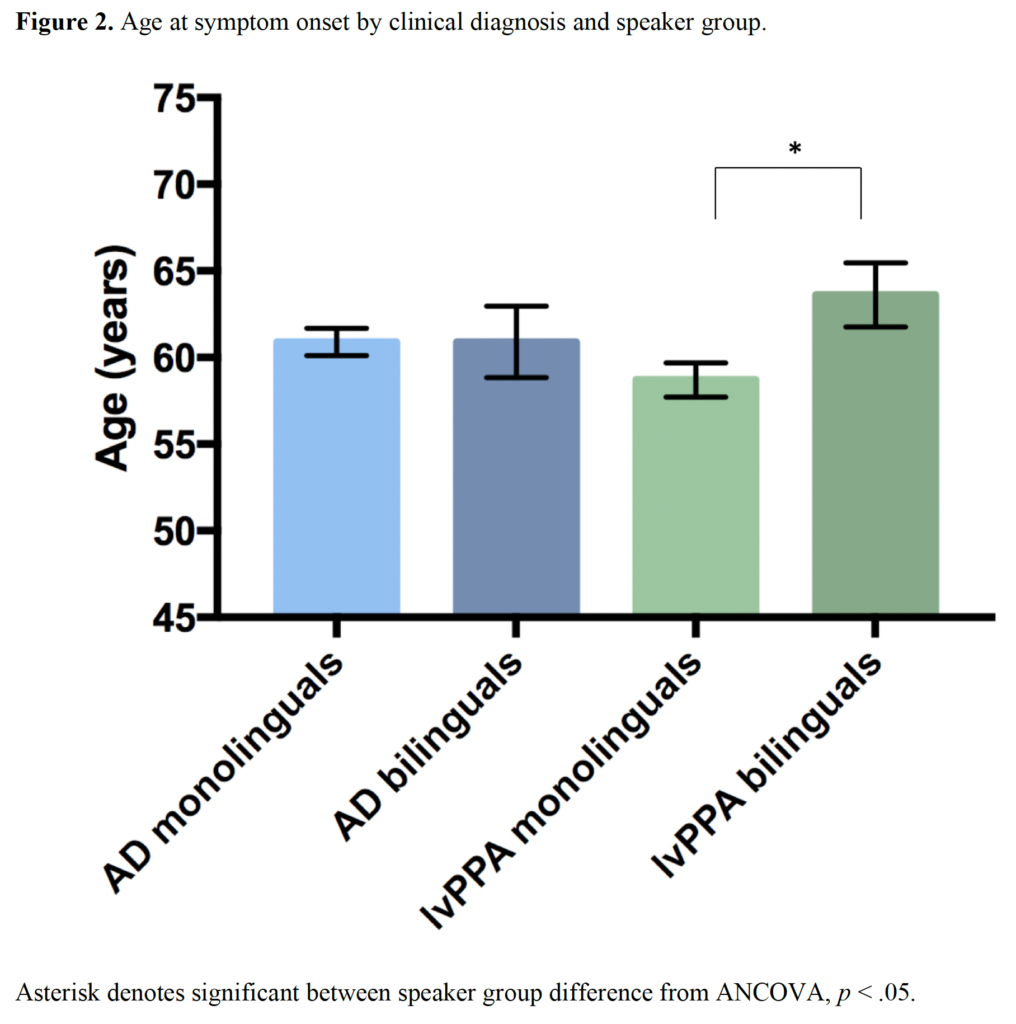
Introduction The effect of bilingualism on age at onset has yet to be examined within different clinical variants of Alzheimer’s disease. Methods We reviewed the research charts of 287 well-characterized participants with either amnestic Alzheimer’s dementia or logopenic variant primary progressive aphasia (lvPPA) and identified bilingual speakers based on regular use of two or more […]
Alzheimer’s Association grant recipient creates new testing for Tagalog speakers

The Alzheimer’s Association® awards grants to researchers who are working on projects that will help advance treatment, improve care and further our knowledge about Alzheimer’s and other dementias. We are lucky to have so many leading researchers located within our chapter boundaries. One such grant recipient, Dr. Jessica De Leon, is working to create cognitive testing to […]
From discourse to pathology: Automatic identification of Parkinson’s disease patients via morphological measures across three languages

Embodied cognition research on Parkinson’s disease (PD) points to disruptions of frontostriatal language functions as sensitive targets for clinical assessment. However, no existing approach has been tested for crosslinguistic validity, let alone by combining naturalistic tasks with machine-learning tools. To address these issues, we conducted the first classifier-based examination of morphological processing (a core frontostriatal function) […]