Of language, brain health, and global inequities
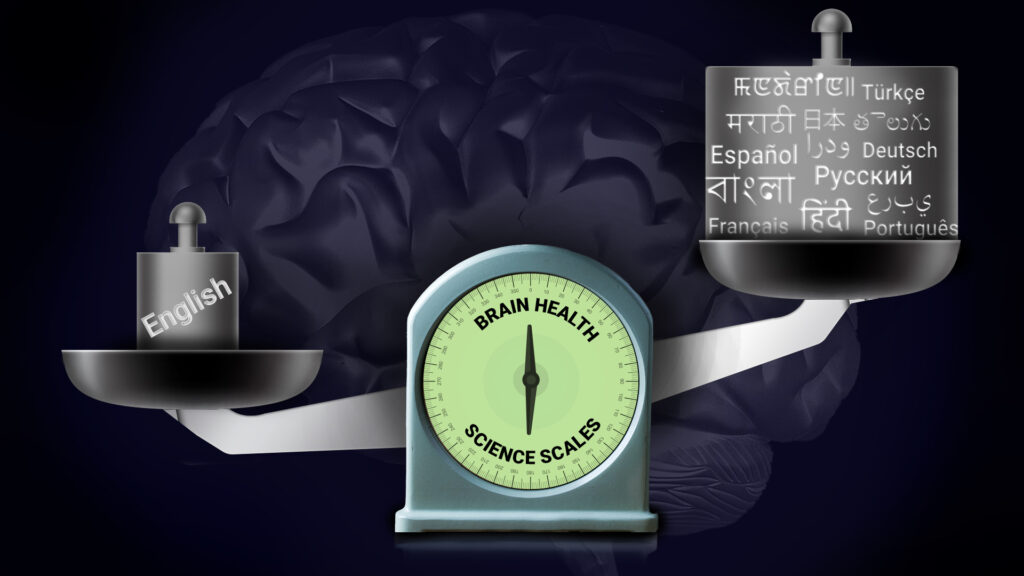
One of the greatest public health challenges of our century lies in the growth of neurodegenerative disorders. Conditions such as Alzheimer’s disease, Parkinson’s disease, and frontotemporal dementia stand as major contributors to disability and mortality in affluent and under-resourced nations alike. Currently affecting over 55 million individuals, their prevalence is expected increase significantly by 2050—especially […]
Include’s second webinar

Second webinar of the Language Diversity and Brain Health series, hosted by Include Network and the Alzheimer’s Association’s Bilingualism, Languages, and Literacy Special Interest Group. With insights from Jee Eun Sung, Peter Garrard, and Arpita Bose.
Innovative research will use AI to understand dementia’s linguistic footprint in Latin America

Latin America faces an imminent and daunting challenge: The prevalence of dementia is projected to surge by 180-250% by 2050. Access to a timely and appropriate health system remains a significant hurdle, with an estimated 70-90% of patients in the region left underserved. However, amidst this bleak landscape, advanced technologies, particularly artificial intelligence and natural […]
An automated machine learning approach to language changes in Alzheimer’s disease and frontotemporal dementia across Latino and English-speaking populations
National Institute on Aging (NIA), National Institutes of Health (NIH)
PIs: Adolfo M. García, Maria Luisa Gorno-Tempini, Agustín Ibáñez
Double-blind, randomized, controlled, clinical trial to evaluate long-term effect of transcranial magnetic stimulation in primary progressive aphasia

Instituto de Salud Carlos III
PI: Jordi Matias-Guiu
Cross-cultural neuropsychological assessment
Instituto de Salud Carlos III
PI: Jordi Matias-Guiu
First language attrition and re-acquisition: A case study

Tribhuvan University
PI: Lekhnath Sharma Pathak
Psychometric analysis of the Argentinean Spanish version of the Minilinguistic State Examination

SeCyT; UNMdP; SPU
PI: Leticia Vivas
Include’s first webinar
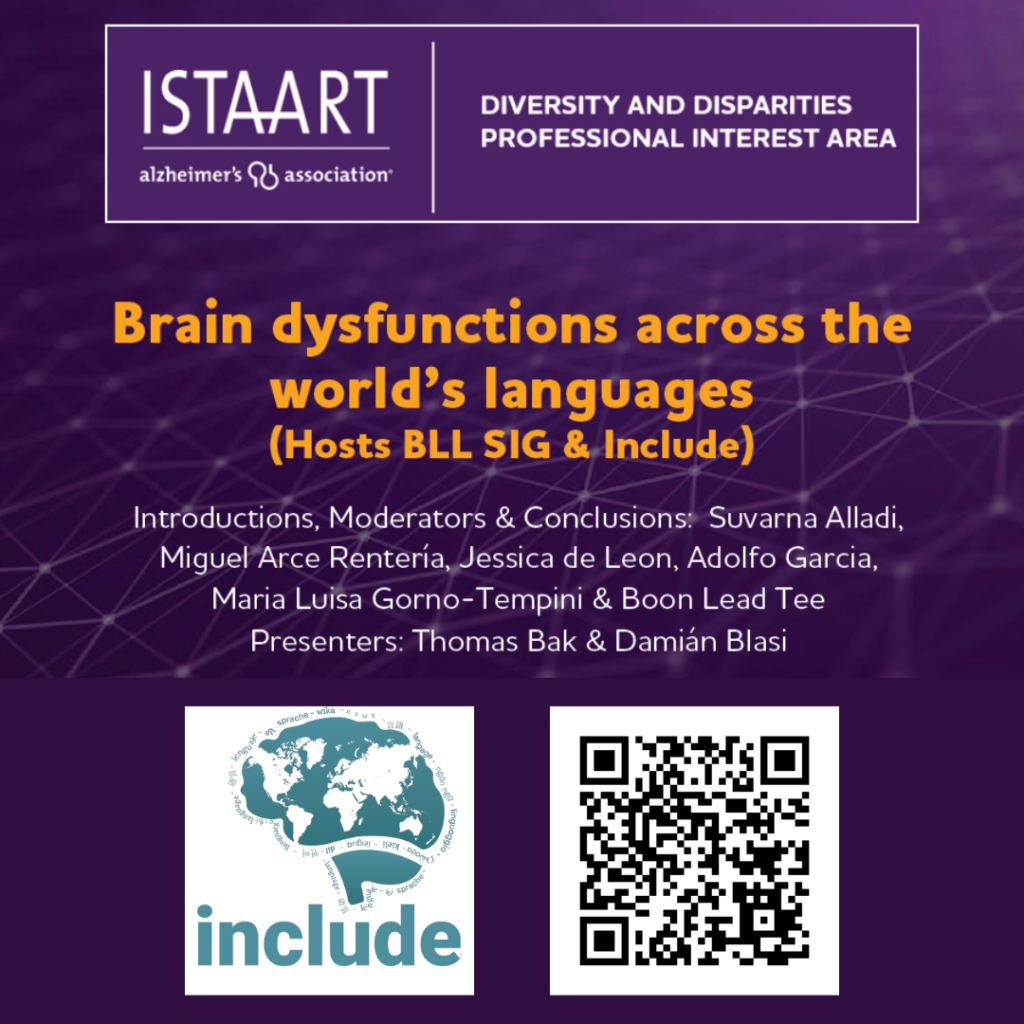
First webinar of the Language Diversity and Brain Health series, hosted by Include Network and the Alzheimer’s Association’s Bilingualism, Languages, and Literacy Special Interest Group. With insights from Damian Blasi and Thomas Bak.
The TULIPA study
ZonMw; Alzheimer Nederland
PI: Sanne Franzen